Sample deliverable — trajectory and pseudotime
Trajectory inference is the module most often bought and least often checked. This is a full run on public data (Paul et al. 2015 — mouse bone marrow haematopoiesis (public, via scanpy)) with the check included — because a pseudotime axis can be produced from any dataset, including one with no trajectory in it.
Do this on your own data: a trajectory can be drawn through almost any dataset — whether it means anything depends on your cells, not on the algorithm. The free QC report shows what filtering removed from your matrix, which is where most spurious trajectories start: omics.hstgenomics.com/qc-check. When pseudotime is worth computing at all: omics.hstgenomics.com/guides/trajectory-analysis-when-it-is-meaningful.
Want it done rather than shown? We do analysis only — send a count matrix, an h5ad or a Seurat object, Cell Ranger output or a public accession and get the analysis back with the code that produced it, at a fixed price agreed before any work starts: omics.hstgenomics.com/quote.
1 · Topology first, pseudotime second
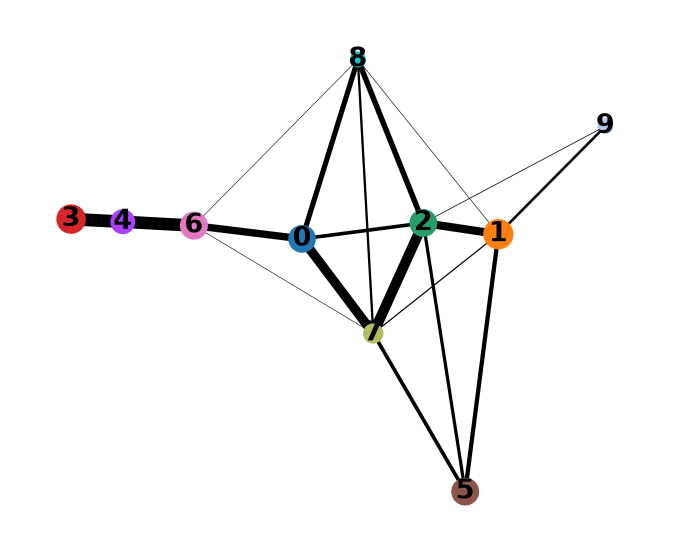
PAGA estimates how strongly clusters are connected before anything is ordered. This matters: a UMAP can make unrelated populations look adjacent, and a pseudotime built on that apparent adjacency is fiction. Only connections the data supports are drawn.
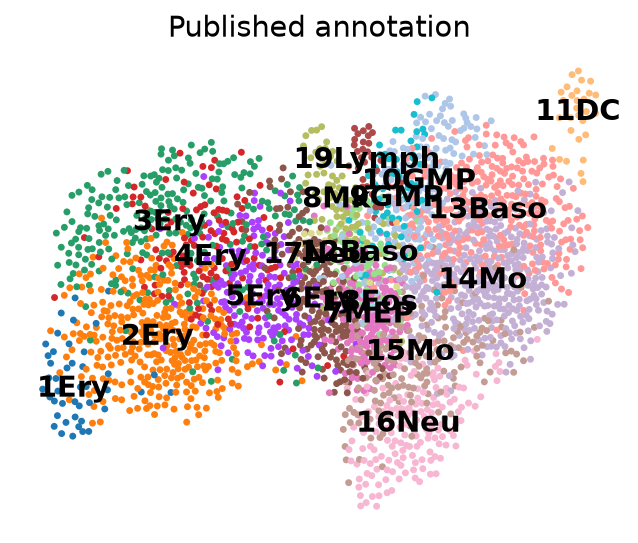
2 · Published annotation, laid out by the topology
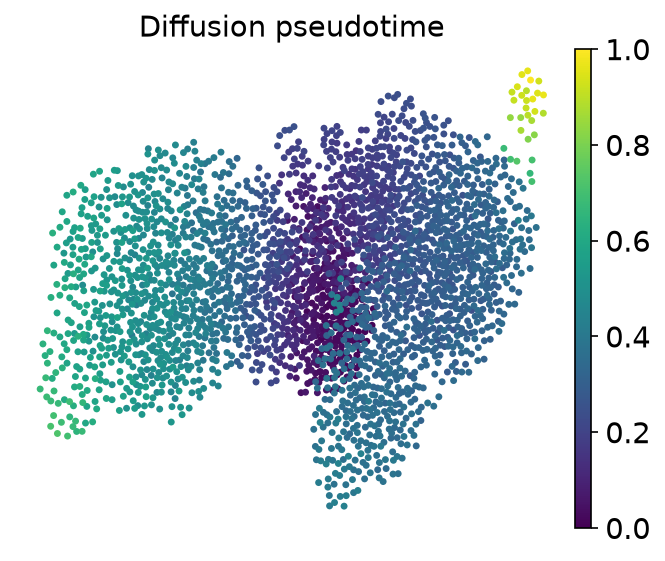
3 · Diffusion pseudotime from a defined root
The root is the progenitor population (7MEP), chosen from the published annotation rather than picked to make the picture look right. Pseudotime runs 0 → 1.
4 · The check
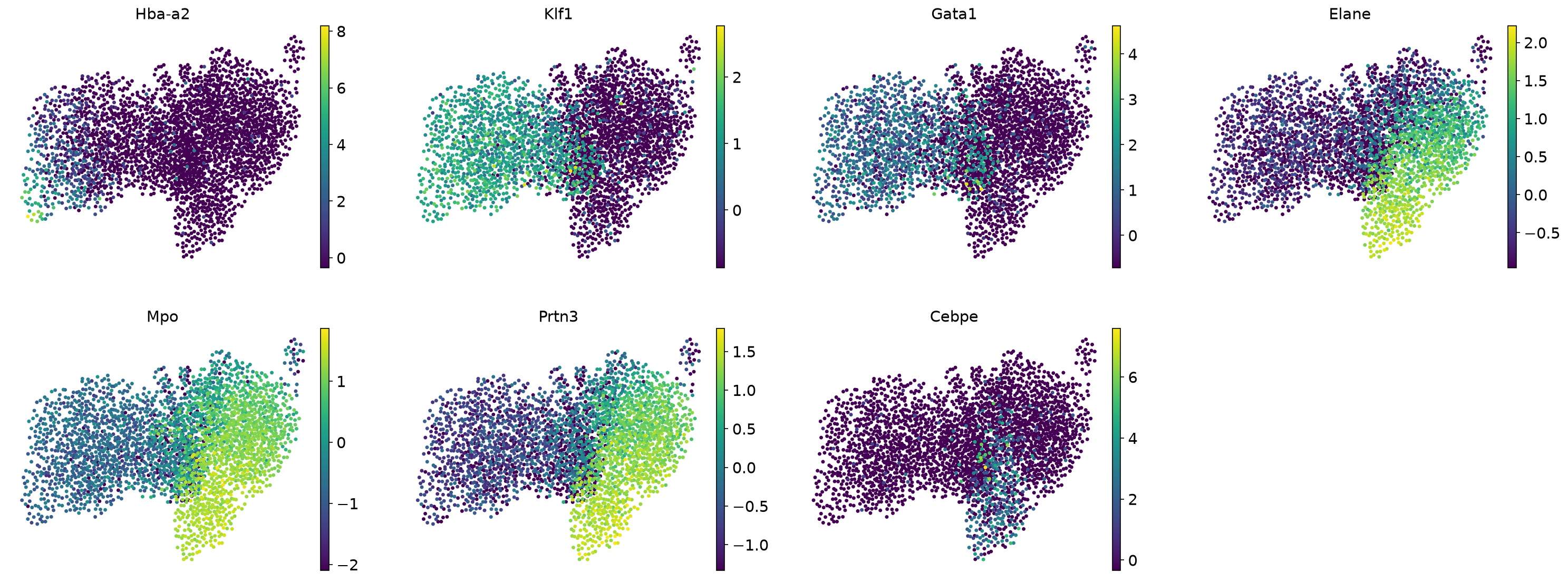
Haematopoiesis is textbook biology: a progenitor should resolve into an erythroid branch (Hba-a2, Klf1, Gata1) and a myeloid branch (Elane, Mpo, Prtn3, Cebpe). Across cells the two marker sets are anti-correlated (r = -0.561) — the branches are real and mutually exclusive, not an artefact of the layout. A trajectory that cannot recover known biology should not be used to claim unknown biology.
What we deliver on a real project
- Topology (PAGA) before ordering, with the connections the data supports.
- Pseudotime from a justified root, plus a statement of what happens if the root is chosen differently.
- Genes varying along each branch, with the branch assignment method stated.
- An explicit sanity check against biology you already know — and we tell you when it fails.
- The script, so the whole thing can be re-run: see the code.
→ Get a quote · differential expression sample · spatial sample